Last Chance to Apply for the 2026-27 AESA Executives in Residence Program
|
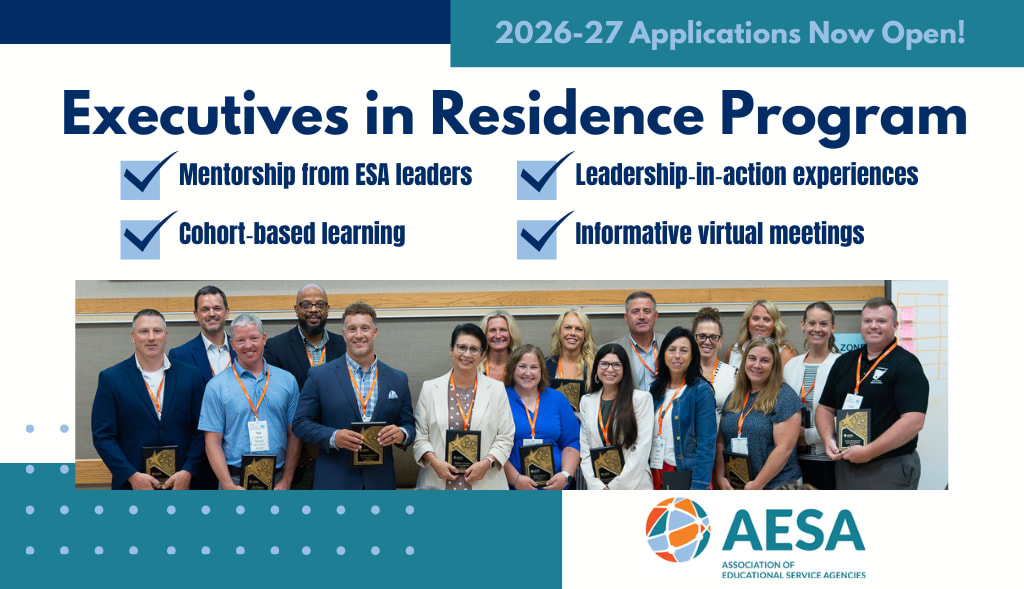
Today is the final day to submit applications for the 2026–27 AESA Executives in Residence (EIR) Program.
The EIR program is designed to support and develop the next generation of ESA leaders through a yearlong experience focused on leadership growth, peer learning, and meaningful connections with colleagues from across the country. Participants gain valuable insight into the broader ESA landscape while strengthening the leadership skills needed to guide agencies into the future.
Learn more and apply: https://www.aesa.us/executives-in-residence/
If you’re interested but need a little more time to complete your application, please reach out to Jessica Huizenga, Chief Programs Officer, immediately at jhuizenga@aesa.us to discuss possible options.
We encourage emerging ESA leaders to take advantage of this opportunity to grow, connect, and contribute to the future of our network.
|
Last Call! Breakout Proposals Due Thursday
|
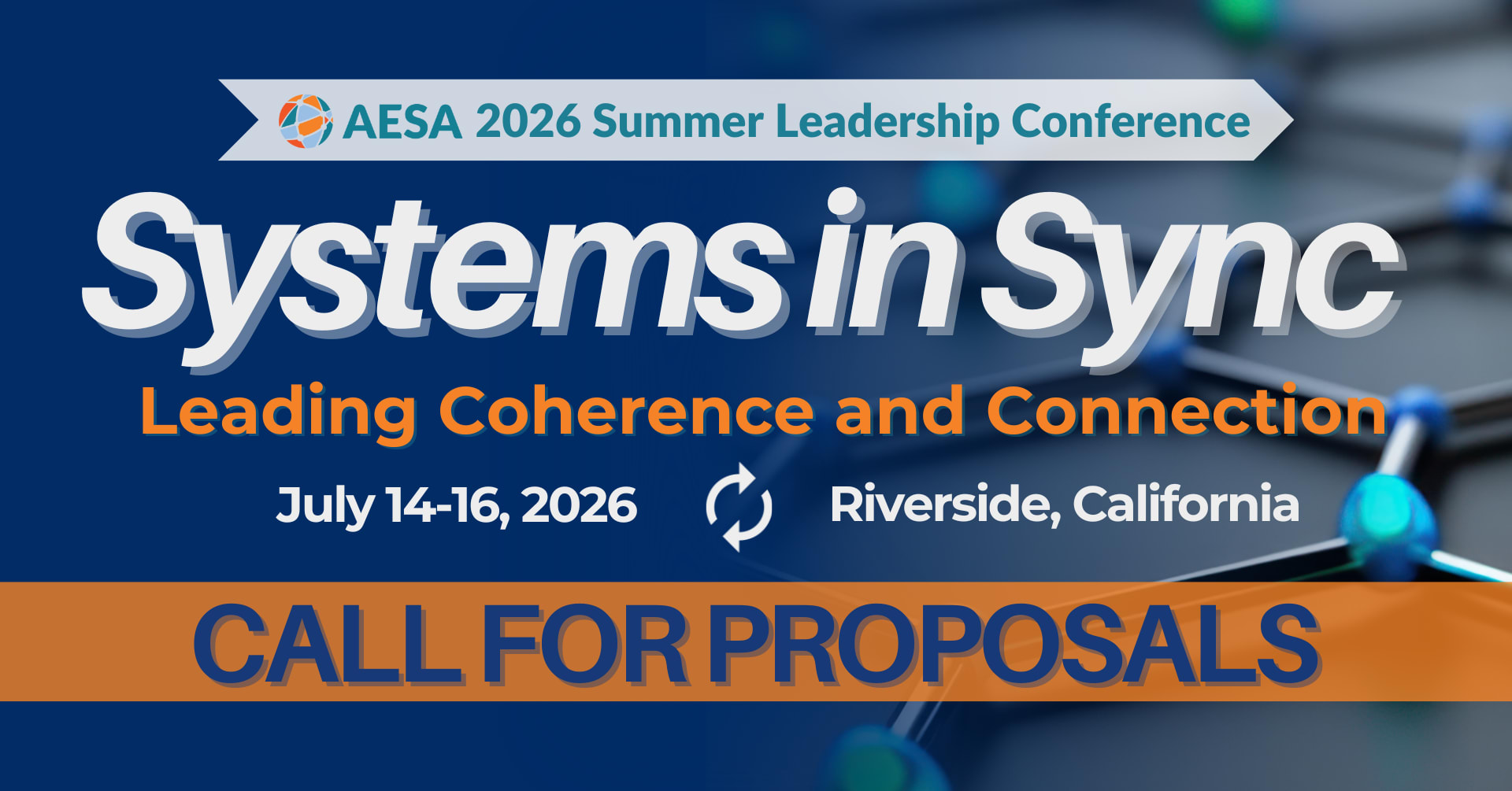
The clock is ticking! If you’ve been thinking about submitting a breakout session for the 2026 AESA Summer Leadership Conference, this is your friendly nudge—proposals are due this Thursday, March 12.
Have a strategy that’s working in your ESA? Built a partnership that’s making a difference? Found a smarter way to lead, support districts, or strengthen systems? Your colleagues across the AESA network would love to learn from it.
We’re looking for practical, engaging sessions that spark conversation and share ideas leaders can take home and put into action right away. Your session should connect to one of our four conference strands, covering topics from leadership and learning systems to partnerships and smart stewardship.
The conference will take place July 14-16, 2026, in Riverside, California, and it’s shaping up to be a fantastic gathering of ESA leaders from across the country.
So grab that great idea you’ve been kicking around, gather a colleague or two, and submit your breakout proposal before Thursday.
|
AESA Joins Ed Orgs to Comment on Professional Student and Degree Definitions
|
AESA joined 12 other education organizations to submit comments on a proposed rule from the Department of Education (ED) to amend the regulations for the Federal student loan programs to implement the changes from the One Big Beautiful Bill Act (OBBBA). Read more about this update.
|
ED Issues Guidance on Strategic Staffing
|
The U.S. Department of Education (ED) issued guidance through a Dear Colleague letter addressing how grantees can use Title II, Part A (Title II) funds under the Elementary and Secondary Education Act (ESEA) to support “innovative teacher workforce strategies.” ED emphasizes the requirement to use evidence-based activities and meet the statutory definition of professional development where required under Title II, and to “plan for sustainability” when determining how to use Title II funds. Read more about this update.
|
New Report Shows Slight Drop in U.S. Teacher Morale
|
Education Week launched their third annual report on The State of Teaching. The report, which features interactive charts showing the Teacher Morale Index score for each state, provides valuable intel for educators, as well as the district leaders, school leaders, and policymakers who support them.
|
1 in 3 Schools Recovered in Math or Reading Post-Pandemic, NWEA Reports
|
A new report from NWEA finds that roughly one-third of schools have recovered in either math or reading since the pandemic, but far fewer have rebounded in both, and offers recommendations for local leaders planning next steps in recovery.
|
New Research Strengthens Case for Virtual Tutoring
|
The74 reports on data from Johns Hopkins University showing that students receiving virtual one-on-one tutoring made measurable gains in reading, reinforcing evidence suggesting that virtual models can be as effective as in-person tutoring.
|
Educators Warn Flat English Learner Funding Falls Short of Growing Demand
|
Education Week examines the impact of Congress’s approved level funding for English learners in the FY26 budget, raising concerns about its inadequacy amid a growing student population and rising education costs.
|
April ADA Changes: What Districts Need to Know
|
In April 2026, updated federal requirements under Title II of the Americans with Disabilities Act (ADA) will take effect, significantly expanding digital accessibility expectations for K–12 public school districts. These updates reinforce an essential responsibility: ensuring all communication platforms and content are fully accessible to individuals with disabilities. The Donovan Group has a digital accessibility toolkit for you to use.
|
Future of IES Recommendations Released
|
Introducing the P2C CTE Hub
|
Across the country, states are being asked to do more with CTE, and for good reason. Research continues to show that students who participate in high‑quality CTE programs are more likely to graduate, enroll in postsecondary education, and earn workforce‑relevant credentials.
Nearly every state has expanded expectations around workforce alignment, accountability, and equity, yet many states are working with fragmented systems: labor market data in one place, programs of study in another, inconsistent Perkins reporting, and career exploration tools that don’t connect to statewide planning.
The P2C CTE Hub was built to solve those problems.
The CTE Hub brings together critical components of a robust CTE program in a single, connected system that can be used by educators, employers, students, and families.
Inside the Hub, you can:
- Build awareness of education entry and exit points with Career Cluster Maps
- Align programs of study to regional workforce demand using integrated labor market insights
- Organize pathways, skills, and credentials within a clear career framework
- Monitor participation, equity, and Perkins performance through built‑in dashboards
- and more!
You can see this approach in action through New Mexico’s statewide CTE Hub, where career exploration, labor market alignment and accountability live in one coordinated platform.
|
Correspondence Address:
PO Box 404, Cheshire, CT 06410
|
Remittance Address:
Department 3990, PO Box 986500
Boston, MA 02298-6500
|
|