|
Investing in Future Leaders: Support the AESA Foundation
|
At AESA, we believe strong leadership is essential to the success of educational service agencies and the schools and students they serve. That’s why the AESA Foundation is committed to expanding access to high-quality leadership development opportunities—and why we’re asking for your support.
The application window for the Executives in Residence Program is now open, offering valuable mentorship and guidance to current and aspiring ESA leaders. Later this month, registration will open for the AESA Leadership Academy, a premier learning experience designed to strengthen and support current CEOs. Both programs play a critical role in building leadership capacity across our network.
We never want financial constraints to prevent a deserving leader from participating. Your donation to the AESA Foundation helps provide scholarships and financial assistance so that talented leaders can access these transformative opportunities—regardless of budget limitations.
In addition, the Foundation is planning an Online Auction this spring to further support these efforts. Watch for more details and opportunities to participate.
Please consider making a gift to the AESA Foundation today. Together, we can ensure these programs continue to develop and inspire the leaders who will shape the future of ESAs and the communities they serve.
|
The AESA Foundation’s PAL (Promoting Agency Leadership) Program offers a meaningful way to invest in the future of education. A $2,000 annual sponsorship supports scholarships and leadership development, with national recognition at Foundation events and in promotional materials. Select “Be a PAL” when donating or contact Tina Viletto to learn more.
|
February 2026 State Examiner: Tracking Property Tax and School Finance Trends
|
The February 2026 report highlights accelerating state activity around property tax reform and school finance restructuring, trends that could significantly affect district revenue stability and regional service delivery. As budget pressures intensify, ESAs are well positioned to support districts through shared services, strategic planning, and coordinated advocacy. This issue features legislative monitoring on tax and education finance policy, statehouse updates affecting K–12 systems and ESAs, state budget and fiscal trend analysis, national research impacting education, and an advocacy focus on Building Coalitions that Win to strengthen ESA influence and advance shared legislative priorities.
|
|
Expanding Global Learning Across the AESA Network
|
In an increasingly interconnected world, global competence is no longer optional — it is foundational to effective teaching and future-ready learning.
AESA Global is excited to partner with the Montana Professional Learning Collaborative later this spring to explore how global education moves beyond travel and exchange and becomes an embedded instructional mindset that enhances classroom practice, student engagement, and educator growth.
If your ESA is interested in hosting a similar conversation or exploring how AESA Global can support professional learning in your region, please reach out to Angie Cedillo Pulla, AESA Global Engagement & Operations Specialist.
|
One Week Left: EIR Application Window Closing Soon
|
The application window for the Executives in Residence (EIR) program closes one week from today, and we encourage eligible leaders to submit their materials before the deadline.
The AESA Executives in Residence program provides a unique opportunity for experienced ESA leaders to continue making a national impact. EIRs lend their expertise to advance AESA initiatives, support professional learning, mentor leaders, and contribute to projects that strengthen educational service agencies across the country.
If you’re considering applying, we encourage you to reach out to current or past EIR participants. Their insights—not only about sessions and events, but also the relationships, mentoring, and agency visits—are often the best window into what the program truly offers.
|
We’re Still Seeking Proposals for the Summer Leadership Conference!
|
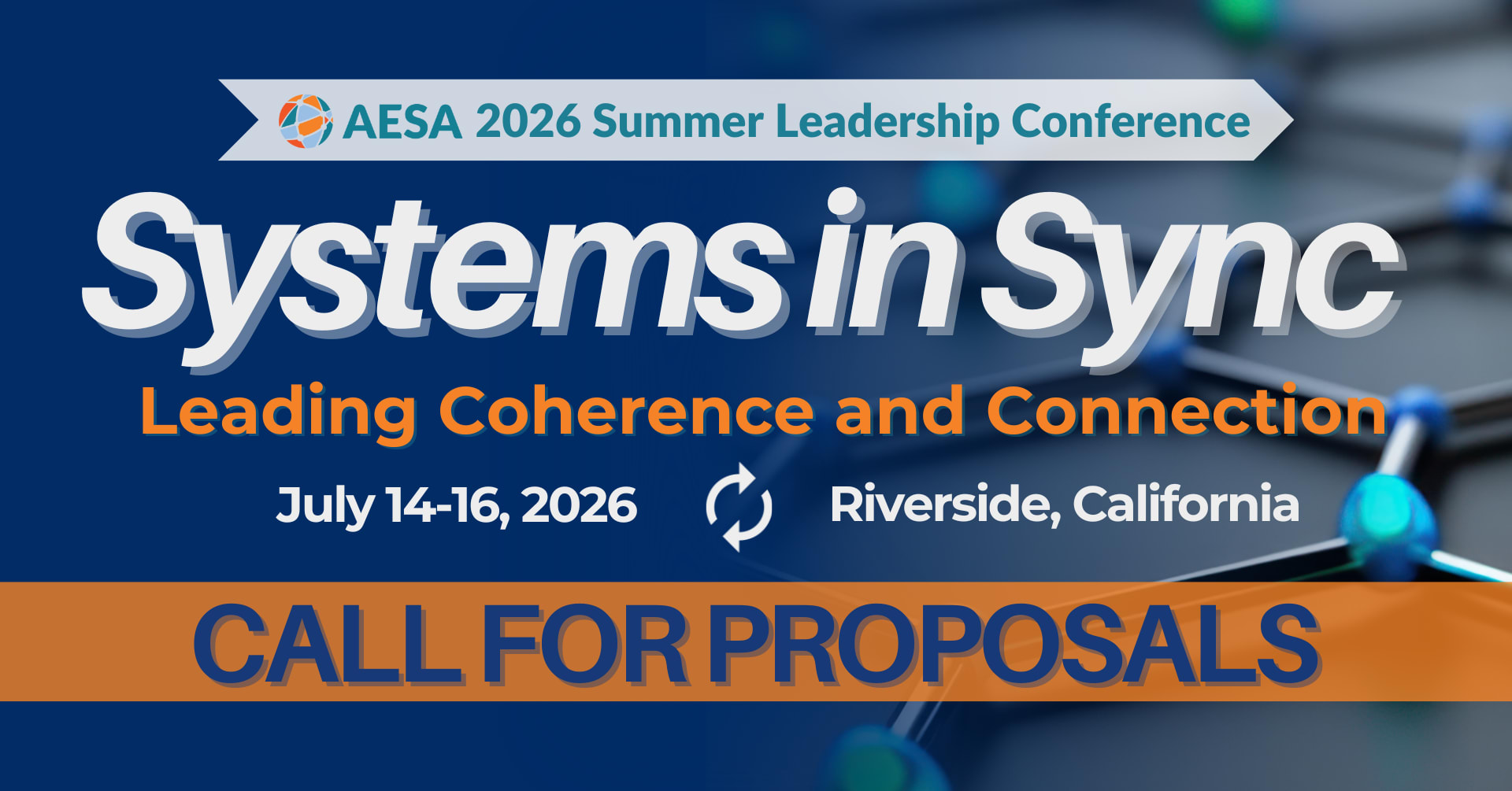
There’s still time to submit a proposal for the 2026 AESA Summer Leadership Conference.
We’re looking for engaging, practical sessions that support ESA leaders in strengthening systems, advancing regional impact, and leading effectively in complex environments. Proposals should align with one of the conference strands and offer actionable strategies participants can apply in their agencies.
This is an opportunity to share your expertise, elevate your work, and contribute to a powerful national learning experience.
Submit your proposal and view full details here:
https://www.aesa.us/summer-leadership-conference/
We look forward to seeing your ideas!
|
ESAs in Action: Resource Training & Solutions
|
Strong communities are powered by the people who show up every day, including educators, public servants, support staff, and local leaders. AESA member Resource Training & Solutions reflects that commitment across central Minnesota by partnering with schools, cities, counties, and government agencies to support the work that matters most.
Their latest video highlights how Resource adds value, drives innovation, and strengthens communities through professional development, safety services, and local government partnerships, bringing their mission to life every day.
|
|
Behind the Scenes with NWRESD: Stories of Impact and Service
|
The Northwest Regional Education Service District (NWRESD) is taking listeners behind the scenes of regional educational support through its podcast, In the Wings: The NWRESD Experience.
This engaging podcast highlights the people and the often-unseen work that shape education across the region. Each episode spotlights the unsung heroes whose dedication and expertise support schools, empower educators, and ultimately impact students throughout Northwest Oregon.
|
Interagency Agreement (IAA) Update
|
On February 23, the U.S. Department of Education announced two additional Interagency Agreements (IAAs). AESA continues to anticipate additional IAAs that would move the Office of Special Education and Rehabilitative Services out of the Department of Education, as well as transfer the Office of Civil Rights to the U.S. Department of Justice. Read more about this update.
|
Special Education Enrollment Keeps Growing. These 3 Graphics Show How.
|
The number of students with disabilities ages 3-21 who qualify for special education services in the U.S. rose 3.8% — or by 301,991 students — in 2024 when compared to the year before, according to federal data analyzed by The Advocacy Institute, a nonprofit that works to improve the lives of people with disabilities. Coverage on K-12 Dive.
|
Parents Favor Free Tutoring, Summer Camp, Open Enrollment … Annual Testing? Not So Much
|
A new survey from 50CAN finds strong parent support for free tutoring and Education Savings Accounts, but significantly lower support for annual testing, highlighting varied views on key education policies.
|
K-2 Suspensions Were Recently Banned in Nebraska. Now, Lawmakers Want to Go Back
|
Several states, including Nebraska, Minnesota, and Texas, are reconsidering bans on suspending K-2 students, citing concerns about school safety and the need to prompt parental involvement in addressing behavioral issues.
|
Why Media Literacy Efforts Are Failing to Keep Up With Misinformation
|
EducationWeek reports on a recent study finding that both students and educators lack adequate support to navigate today’s media landscape, even as students express a strong desire for more opportunities to discuss current events with their peers.
|
Heritage Calls for Every State to Challenge Plyler v. Doe
|
In a new report, the Heritage Foundation argues that the United States Supreme Court should overturn the Plyler v. Doe decision that has been in place since 1982, asserting that states should instead be allowed to exclude undocumented students from public education.
|
75,000 Undocumented Students Graduate High School Each Year. What Happens Next?
|
New analysis of U.S. Census and graduation data highlights the number of undocumented students graduating each year and raises concerns about their postsecondary pathways as access to college supports comes under threat.
|
Conservatives Want Schools to Teach this Strict Life Path They Say Avoids Poverty
|
The Washington Post reports on bills in at least seven GOP-led states that would require lessons on the “success sequence": graduate from high school, find a full-time job, and get married before having kids. Critics say it ignores systemic challenges and stigmatizes non-traditional families.
|
TNTP’s Strategy to Transform Education
|
TNTP (formerly The New Teacher Project) has released a new strategic plan designed to hold access and capability together and build the solutions required to deliver both at scale for preparing young people for meaningful work and meaningful lives by 2035. Check it out. (Must have subscription.)
|
Collaborating Partner News
|
Speak Up National Cybersecurity Survey Now Open
|
Project Tomorrow's Speak Up National Cybersecurity Survey, a partnership with iboss, focuses on how K-12 school districts are responding to cybersecurity risks and threats. This project is part of a 5-year research effort to help K-12 districts address the real threats of cyberattacks on network infrastructure and data assets. Unlike other surveys on the topic, their focus is on ensuring that educational leaders have the best insights to make better decisions. Speak Up also provides national comparatives.
|
Correspondence Address:
PO Box 404, Cheshire, CT 06410
|
Remittance Address:
Department 3990, PO Box 986500
Boston, MA 02298-6500
|
|