|
Supporting ESA Advocacy in State Legislatures
|
As state legislatures convene for their 2026 sessions, critical decisions are already underway that will shape education policy, funding, governance, and service delivery for the year ahead. While federal policy sets broad direction, many of the decisions that affect day-to-day practice for schools, districts, and ESAs are made at the state level—particularly in the opening weeks of session as budgets are drafted, committees organize, and priorities take form.
Early engagement is essential to ensure the ESA perspective is included from the start, and AESA’s state advocacy services are designed to help members navigate and influence these conversations effectively.
|
Monthly Legislative Monitoring: The State Examiner
|
AESA’s State Examiner is our monthly legislative monitoring report that keeps you informed on education policy developments state-by-state.
Accessing and reviewing the publication regularly provides a comprehensive view of evolving policy landscapes and helps you align your advocacy with emerging opportunities or challenges.
|
Professional Learning to Strengthen Advocacy
|
AESA offers state advocacy workshops and customized presentations to build strategic capacity. Options include a three-day immersive workshop on legislative processes and policy levers, a one-day session focused on essential advocacy skills and budgeting insight, and tailored state-specific presentations aligned to local contexts and legislative calendars. These experiences are designed to help members engage policymakers with confidence and clarity throughout the session.
|
AESA’s Advocacy Toolkit supports effective engagement by helping members analyze audiences, craft clear and compelling messages, choose appropriate advocacy strategies, and engage directly with policymakers through meetings, testimony, and relationship-building.
|
Member Engagement and Sharing Success
|
Member experiences and successes strengthen advocacy across the network. AESA encourages members to share insights and success stories from state-level engagement to elevate best practices and inform peers. Questions or stories may be directed to Joan Wade, AESA Executive Director.
|
Decisions made during this legislative session will shape education priorities and operational conditions for ESAs well into the future. AESA remains committed to supporting informed, coordinated, and effective state advocacy.
Learn more about AESA’s state advocacy services on the State Advocacy page of the AESA website.
|
ESA Innovators’ Circle | 2026–27 Cohort
|
Many AESA members have participated in the Business Strategy Framework courses and are already applying those strategies within their agencies. The 2026–27 ESA Innovators’ Circle builds on that momentum, offering continued learning and just-in-time coaching as teams move from planning into implementation.
Designed specifically for educational service agencies, this subscription-based program supports agency teams in strengthening strategic capacity, exploring innovative service models, and connecting with peers from across the country.
Year Two Program Overview
Andy Pechacek and Doreen Marvin will continue as facilitators and coaches. The 2026–27 program includes the same core elements as the inaugural year:
-
Three 90-minute virtual networking sessions
March 20, 2026 · August 6, 2026 · February 4, 2027
-
Four 90-minute customized consulting sessions
-
Access to a virtual community of shared tools and resources
-
10% discount on additional customized consulting services
Participation is limited to 12 ESAs to ensure a highly personalized experience. Membership is organization-based, not individual. One person should register on behalf of the ESA; the primary contact will later submit a list of participating staff for the 2026–27 cohort.
The investment for the 2026–27 ESA Innovators’ Circle is $6,500 per ESA.
Space is limited. Register early to secure your spot.
If you have questions, contact Sheila King, Chief Strategy Officer.
|
Vermont Launches Its First BOCES
|
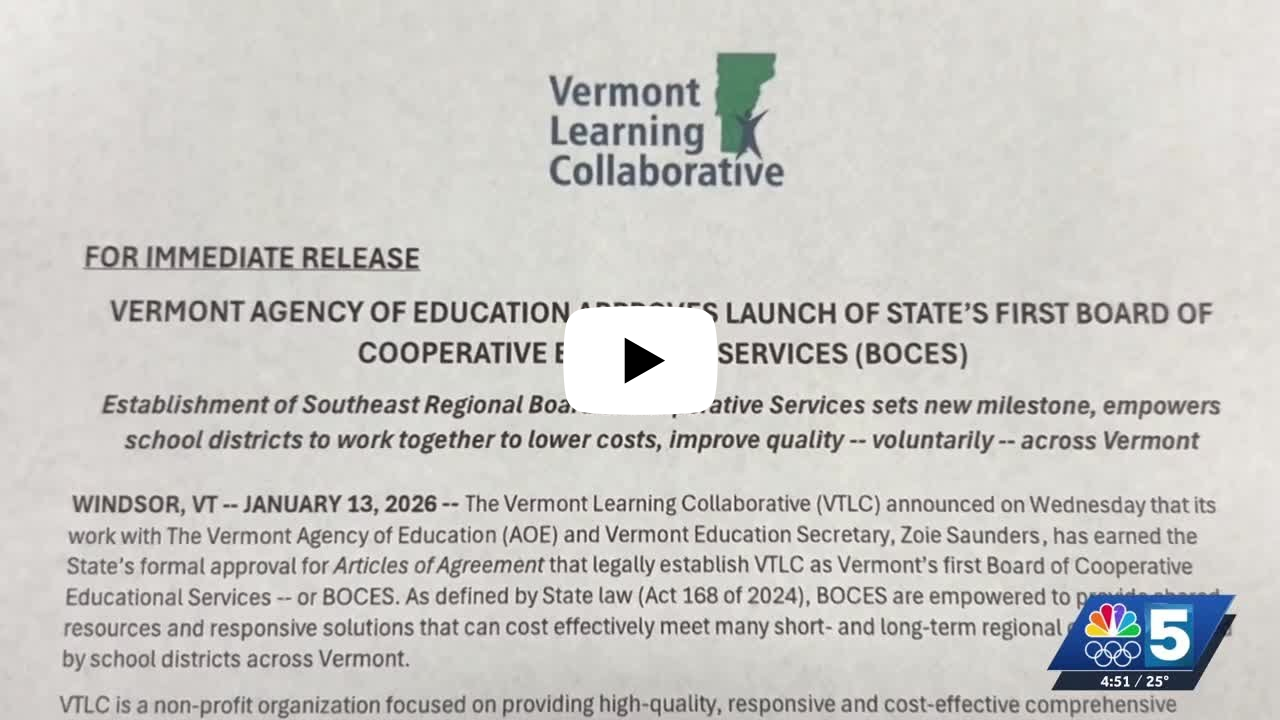
AESA is pleased to congratulate the Vermont Learning Collaborative (VTLC) on receiving state approval to operate as the Southeast Vermont Regional BOCES, Vermont’s first Board of Cooperative Educational Services.
“This moment is the culmination of many years of vision, work, and persistence by leaders in the southeast region,” said Jill Graham, Executive Director of VTLC.
Graham also expressed appreciation for AESA’s support, noting, “Thank you for taking our fledgling agency under your wing and supporting our work. I look forward to our agency’s next steps and our continued partnership with AESA.”
This milestone reflects the power of voluntary, regional collaboration to reduce costs, strengthen services, and improve outcomes. Read the full press release to learn more.
|
|
Now Seeking Applicants for MREA Executive Director
|
We’re currently partnering with the Minnesota Rural Education Association (MREA) to fill their Executive Director role, offering personalized guidance that aligns with the agency’s mission and strategic goals.
|
|
Ohio ESC Association Appoints New Deputy Director
|
The Ohio Educational Service Center Association (OESCA) has announced the appointment of David Larson, Superintendent of the Miami County Educational Service Center, as its new Deputy Director, effective August 1, 2026. The position was created through OESCA’s strategic planning process to expand capacity and strengthen statewide support for Ohio’s 51 Educational Service Centers. AESA congratulates David and OESCA on this important leadership milestone and looks forward to the continued impact of Ohio’s ESC network. Read the full press release to learn more.
|
Federal Advocacy Meeting Starts TOMORROW!
|
It's not too late to join this week's 2026 Virtual Federal Advocacy Committee meeting! The meeting will provide timely federal updates, focused discussion on priorities critical to ESAs, and an opportunity to align our collective advocacy efforts for this year. Participation in this meeting is free, and no travel is required.
|
|
Department of Education Grants Iowa Waiver for ESEA State Flexibility
|
On January 7, the Department of Education (ED) granted Iowa a waiver from a variety of Elementary and Secondary Education Act (ESEA) regulations through FY2028. Most notably, the waiver will allow Iowa to consolidate its state activities funds for four K-12 programs and "use the funds for any allowable use in each of the included programs.”
|
Administration Releases Dietary Guidelines for Americans
|
The U.S. Department of Agriculture (USDA) and the Department of Health and Human Services (HHS) recently released the 2025-2030 Dietary Guidelines for Americans (DGAs). Updated every five years, the DGAs provide evidence-based recommendations to promote health and reduce chronic disease risk, and by law, USDA must use them to update school nutrition regulations. The new guidance marks a significant shift in federal nutrition policy, emphasizing whole, minimally processed foods, nutrient density, higher protein and full-fat dairy, and the elimination or reduction of added sugars and highly processed foods. Read the breakdown.
|
K-12 Facilities Need $90B to Close Maintenance, Capital Investment Shortfall
|
Public K-12 schools in the U.S. face a shortfall of almost $90 billion to bring their facilities up to standard, a report released this week says. Schools are behind by $56 billion on capital investment and $34 billion on maintenance and operations, says the 2025 State of Our Schools Report, prepared by the National Council on School Facilities, the International WELL Building Institute, and the 21st Century School Fund.
|
Project 2025 Author and Top Trump Official: Special Education Protections and Funding Will Remain
|
The future of special education remains uncertain as the Trump administration faces growing pressure from parents of students with disabilities amid discussions about dismantling the U.S. Department of Education. Administration officials have sought to ease concerns that such efforts could jeopardize protections and services for students.
Department of Education official Lindsay Burke stated that several of Project 2025’s most controversial proposals—including deep cuts to school funding—are not currently under consideration. She also said there is “no reason to anticipate” funding freezes like last summer’s temporary withholding of $7 billion, which disrupted school districts nationwide. Read more on Chalkbeat.
|
Fed Regulation of AI Is Virtually Nonexistent. Is This a Problem for Schools?
|
The lack of federal regulation and guidance for how schools and other organizations should use AI is raising concerns, according to testimony during a committee hearing in the U.S. House of Representatives on Wednesday. The Education and Workforce Committee hearing comes in the wake of President Donald Trump and his administration pushing the idea that the use of artificial intelligence in education and other sectors needs to be unleashed, with minimal regulation, to help fuel innovation. But a lack of regulation or guardrails could lead to problems down the road, according to people who testified at the hearing. Coverage on EducationWeek.
|
How Much Time Do Teens Spend on Their Phones During School?
|
Teenagers spend more than an hour on their smartphones during a typical school day, mostly on social media apps, concludes a new study. The study, published in the Journal of the American Medical Association, or JAMA, on Jan. 5, found that 13- to 18-year-olds spent an average of 70 minutes on their smartphones during the school day. Social media apps accounted for the greatest share of students’ smartphone use during school hours, with teens spending nearly 30 minutes per day on these platforms, the study found. Video and gaming apps followed, with nearly 15 minutes each. Coverage on EducationWeek.
|
Collaborating Partner News
|
This month's article features information about the upcoming CoSN/AASA edLeader Panel broadcast scheduled for February 9, 2026 which will feature a panel of three leading edge superintendents and CoSN’s Data Privacy Project Director who will share the challenges and best practices regarding student data privacy practices in their school districts.
|
Correspondence Address:
PO Box 404, Cheshire, CT 06410
|
Remittance Address:
Department 3990, PO Box 986500
Boston, MA 02298-6500
|
|